Sales Enquiry: +91-9355432881, sales@blinkexam.com | Support: +91-9582874969, support@blinkexam.com Contact Us

Introduction to the Digital Shift in Education

Education is evolving faster than ever before. Just a decade ago, most exams meant crowded classrooms, stacks of papers, and anxious invigilators walking between desks. Today, however, technology has flipped the script. Schools, universities, and organizations are rapidly embracing online examination systems to make assessments smarter, faster, and far more secure.

Why is this happening? Well, the answer lies in one simple phrase—digital demand. The modern world runs on digital solutions, and education is no exception. With remote learning, global connectivity, and advanced AI tools entering classrooms, traditional exams are slowly becoming outdated.

Think about it: if we can work remotely, attend virtual classes, and collaborate online, shouldn’t assessments also evolve? Absolutely. And that’s exactly why online examination systems are becoming the future of education.

Let’s dive deeper and explore why this transformation is happening and why it’s here to stay.

Understanding Online Examination Systems

Before we talk about the future, let’s first understand what online examination systems are:

What is an Online Examination System?

An online examination system is a digital platform designed to conduct, manage, and evaluate exams through the internet. Instead of using paper and pen, candidates log into a secure portal where they answer questions digitally.

These software often include features such as:

  • Automated question delivery
  • Instant result generation
  • AI-based proctoring
  • Time tracking
  • Real-time monitoring

In short, they transform the entire examination process into a streamlined digital experience.

How Online Exams Work

Online exams typically follow a simple process:

  • Students receive login credentials.
  • They access the exam portal.
  • Questions appear on the screen.
  • Answers are submitted digitally.
  • Results are generated automatically or reviewed online.

Sounds simple, right? Yet behind the scenes, difficult technologies ensure fairness, security, and accuracy.

The Growing Digital Demand in Education

The push toward online exams didn’t appear overnight. Several global trends are driving this shift.

Rise of Remote Learning

Virtual classrooms, digital resources, and online collaboration tools have become the norm. When learning moved online, examinations had to follow. After all, conducting traditional exams for remote learners simply isn’t practical.

Technology Integration in Classrooms

Modern education is already heavily digital:

  • Smartboards replace chalkboards
  • Learning management systems manage coursework
  • Digital libraries replace physical archives

So it only makes sense that assessments also move into the digital ecosystem.

Key Benefits of Online Examination Systems

Online examination systems aren’t just a trend—they solve real problems in education.

Convenience and Flexibility

One of the biggest advantages is flexibility. Students can take exams from any location, eliminating the need for physical exam centers. This is especially valuable for:

  • Distance education programs
  • Professional certifications
  • Global recruitment tests

Instead of traveling hundreds of kilometers for an exam, candidates can simply log in and start.

Faster Evaluation and Results

Traditional exam evaluation can take weeks. Teachers must manually check hundreds of papers, which is both time-consuming and exhausting. Online systems dramatically speed up this process.

Multiple-choice questions can be graded instantly, while descriptive answers can be evaluated digitally. As a result, results are often available within minutes or hours.

Enhanced Security with AI Proctoring

Security is one of the biggest concerns in examinations. Thankfully, the modern platform BlinkExam addresses this with advanced technologies.

AI proctoring tools can:

  • Detect suspicious behavior
  • Monitor eye movement
  • Identify unauthorized devices
  • Flag unusual activity

This level of monitoring ensures fairness without requiring a physical invigilator.

Cost-Effectiveness for Institutions

Running traditional exams is surprisingly expensive.

Reduced Infrastructure Costs

Think about everything required for a physical exam:

  • Printing thousands of papers
  • Hiring invigilators
  • Renting exam halls
  • Managing logistics

Online examination systems eliminate most of these costs, allowing institutions to allocate resources more efficiently.

Automated Administrative Processes

Administrative work in traditional exams can be overwhelming. Tasks such as scheduling, seating arrangements, and paper distribution require large teams.

Online systems automate these tasks, saving time and reducing human error.

Improving Student Experience

Students also benefit tremendously from digital exams.

Instant Feedback

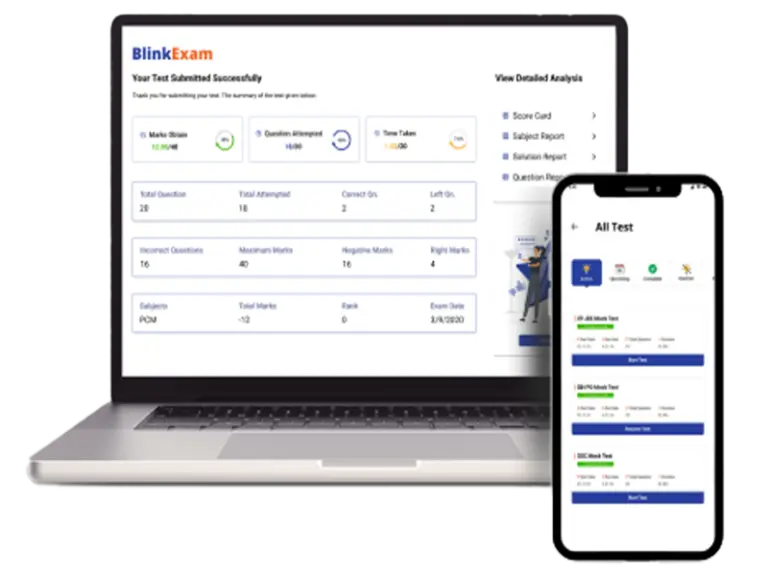
BlinkExam provides immediate feedback after exams. Students can review their answers, understand mistakes, and improve their knowledge. This quick feedback loop enhances learning outcomes significantly.

Reduced Exam Anxiety

Believe it or not, digital exams can reduce stress. Students often feel more comfortable taking exams in familiar environments rather than crowded halls. Additionally, clear timers, progress indicators, and intuitive interfaces help candidates stay focused.

The Role of AI and Automation

Artificial intelligence is transforming online examinations in fascinating ways.

Smart Proctoring Systems

AI-powered proctoring tools can monitor candidates using webcams and microphones. These systems analyze behavior patterns and flag potential cheating attempts.

In many cases, AI proctoring is even more reliable than human invigilators.

Data Analytics in Assessments

Online exams generate valuable data that educators can analyze.

For example, institutions can identify:

  • Frequently missed questions
  • Difficult topics
  • Student performance trends

This data-driven insight helps teachers improve both teaching methods and exam design.

Challenges in Traditional Examination Methods

To understand the future, we must also look at the limitations of traditional exams.

Manual Errors

Human evaluation often leads to errors. Marks may be calculated incorrectly, answer sheets misplaced, or grading inconsistencies introduced.

Digital systems reduce these risks significantly.

Security Concerns

Paper exams are vulnerable to leaks, impersonation, and malpractice. Once a question paper is leaked, the entire exam becomes compromised.

Online systems, however, use encryption, randomization, and AI monitoring to maintain integrity.

Future Trends in Online Examination Systems

The evolution of digital exams is far from over.

Cloud-Based Exam Platforms

Cloud technology allows institutions to conduct exams at massive scale. Thousands—or even millions—of candidates can take exams simultaneously without system failures.

Mobile-Based Exams

As smartphones become more powerful, mobile-based exams are gaining popularity. Students can participate in assessments directly from their phones.

This makes exams more accessible than ever.

Global Online Certifications

Online examination systems are enabling global certification programs. Candidates from different countries can participate in the same exam without traveling.

This global accessibility opens new opportunities for education and employment.

Conclusion

The world is becoming increasingly digital, and education is evolving alongside it. Online examination systems are not just a temporary solution—they represent the future of assessments. By offering convenience, speed, security, and scalability, these systems address many of the challenges faced by traditional exams. Institutions save resources, students gain flexibility, and the entire evaluation process becomes more transparent and efficient.

As technology continues to advance—with AI, cloud computing, and mobile solutions leading the way—online examinations will only become smarter and more powerful. In a world driven by digital demand, one thing is clear: the future of exams is online.

Read Also:- Advantages and Disadvantages of the Online Examination System in 2026

FAQs

1. What is an online examination system?

    An online examination system is a digital platform that allows exams to be conducted, monitored, and evaluated through the internet.

    2. Are online exams secure?

      Yes. Modern platforms use encryption, AI proctoring, and advanced monitoring tools to prevent cheating and ensure exam integrity.

      3. Can students take online exams from home?

        Yes, many online exams can be taken remotely from home or any secure location with internet access.

        4. What are the benefits of online exams for institutions?

          Institutions benefit from reduced costs, automated processes, faster results, and improved scalability.

          5. Will online exams replace traditional exams completely?

            While traditional exams may still exist in some cases, online examination systems are rapidly becoming the preferred method due to their efficiency and flexibility.

            Leave a Reply